The Great Migration 2025/2026: Serengeti & Masai Mara
The Great Migration in the Serengeti–Mara ecosystem is one of the Seven Natural Wonders of Africa and perhaps the most famous wildlife spectacle on Earth.
What is the Great Migration?
The Great Migration of the Serengeti & Masai Mara regions is a continuous, circular movement of nearly two million wildebeest, joined by hundreds of thousands of zebras, topis, and gazelles, driven by an eternal search for fresh grass and water.
What makes the Great Migration magical?
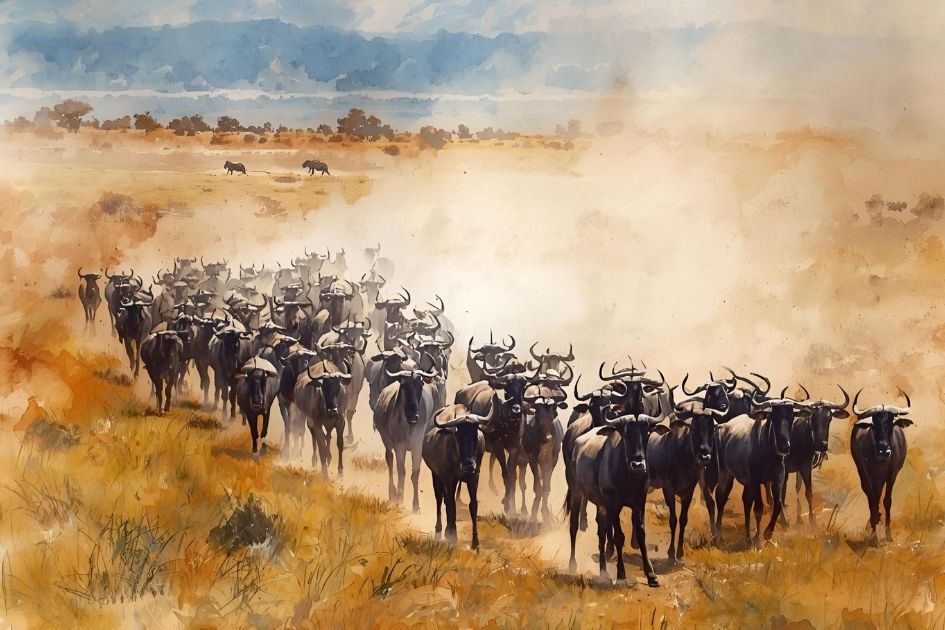
The herds move in huge columns across the plains, raising dust as they go, while predators follow close behind. Lions, leopards, cheetahs, hyenas, wild dogs, and massive Nile crocodiles all take advantage of the abundance of prey. It is the ultimate example of the circle of life—where survival depends on fitness, timing, and instinct.
The journey is strewn with danger. As Darwin said, it is the fittest who survive. It is very interesting to see the animals that comprise the herd and this is based on their eating pattern—they all eat different parts of the same or similar plants so there is no competition for food. Moreover, they have the added advantage of safety in numbers.
What influences the migration patterns of the herds?
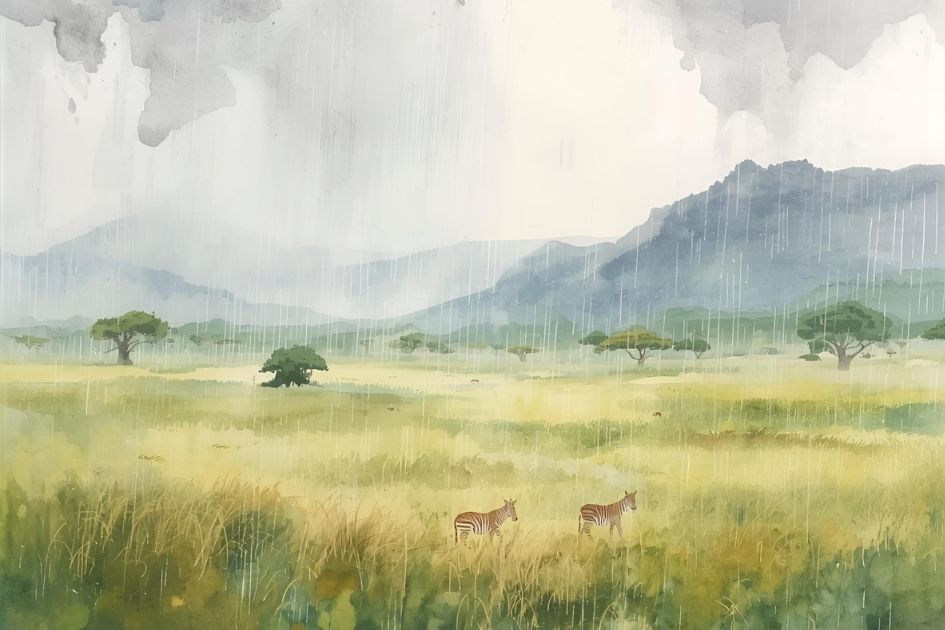
The movemen of the herds is largely dictated by rainfall patterns; many believe animals can sense the rains and adjust their migration routes accordingly.
Although exact timings shift each year, the overall clockwise circuit remains the same: calving in the southern Serengeti and Ngorongoro, moving north into the Western Corridor, then across the Mara River into Kenya’s Masai Mara, before looping back south by year’s end.
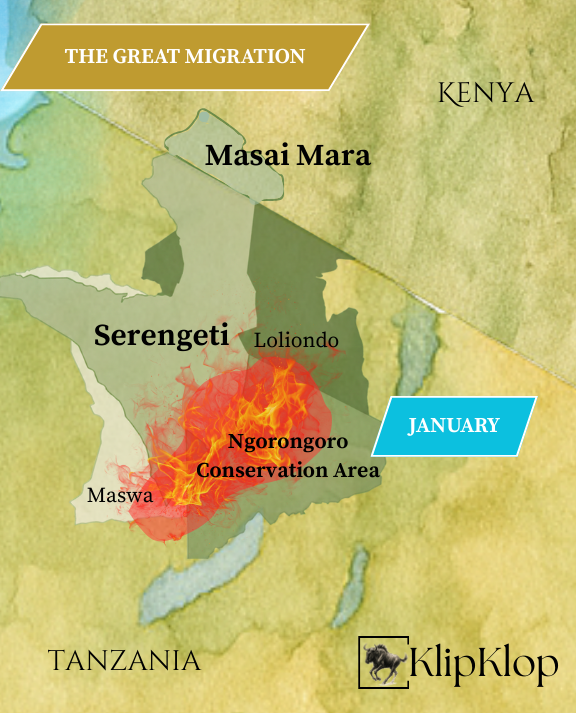
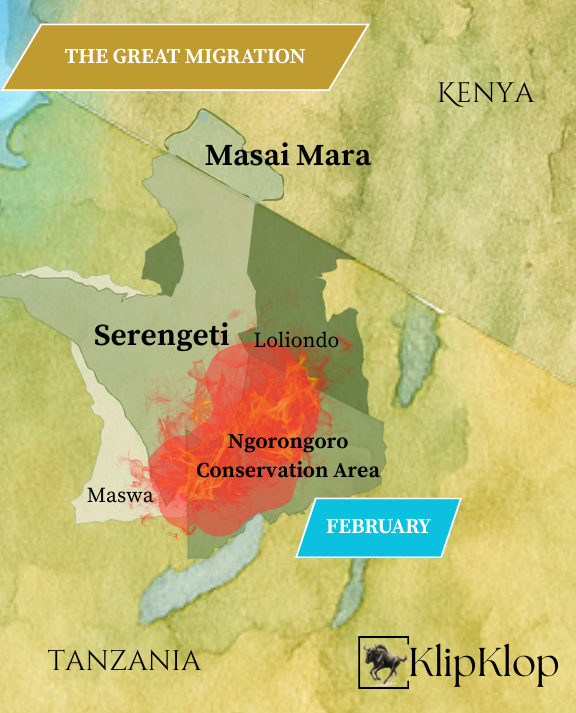
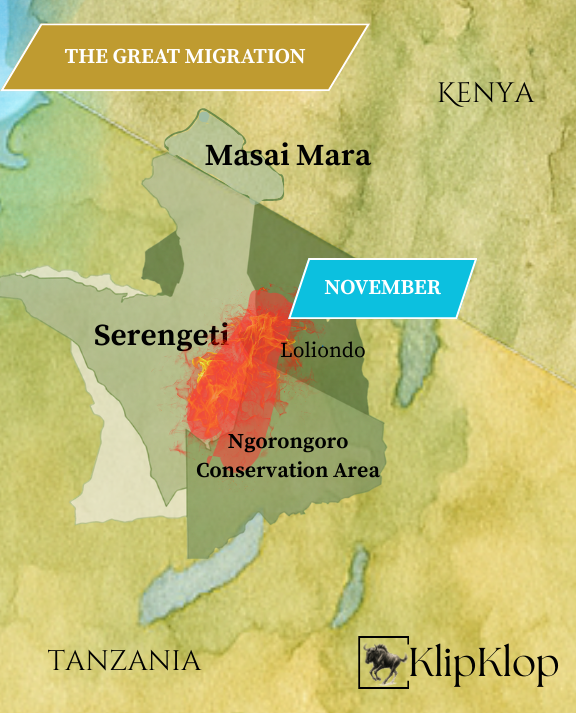
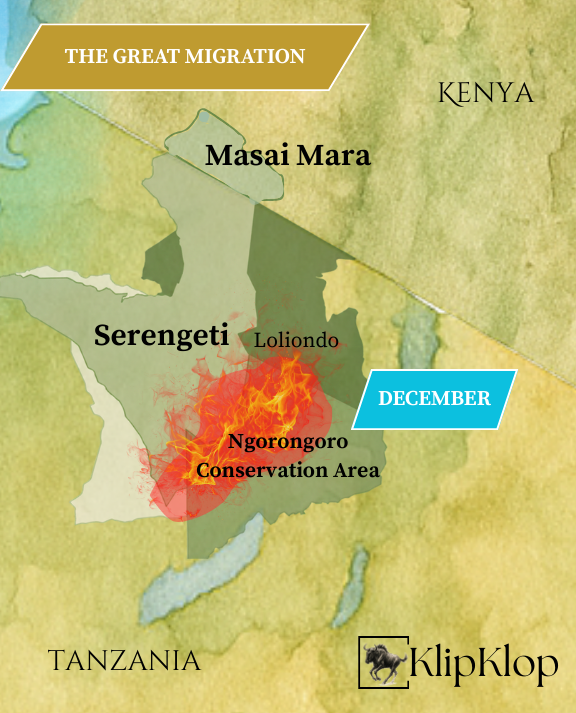
The Great Migration Map 2025/2026
Check our month-by-month map of the Great Migration to see where you should go!


Seasonal Movements of the Great Migration
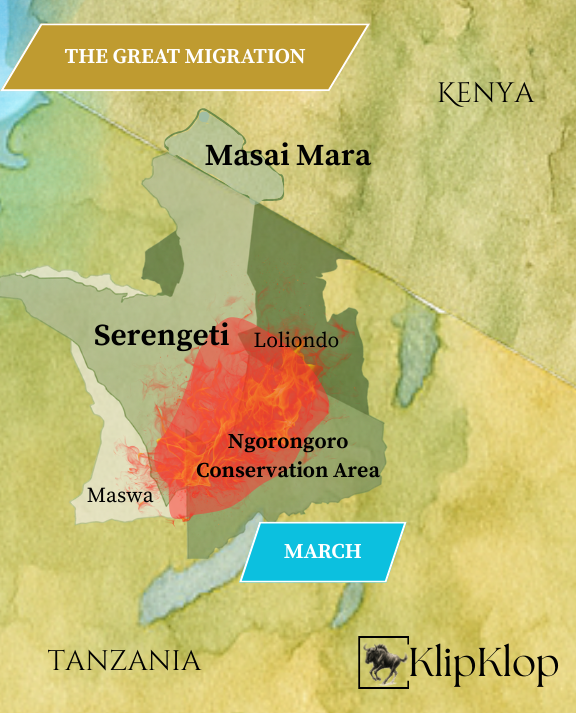
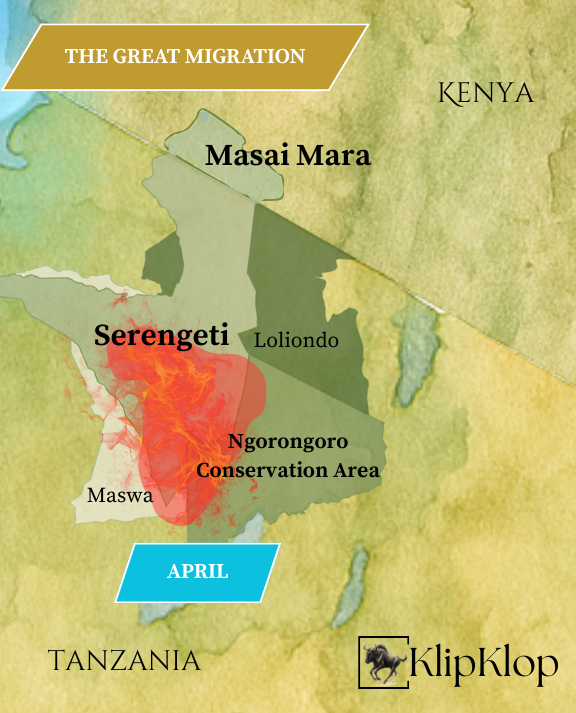
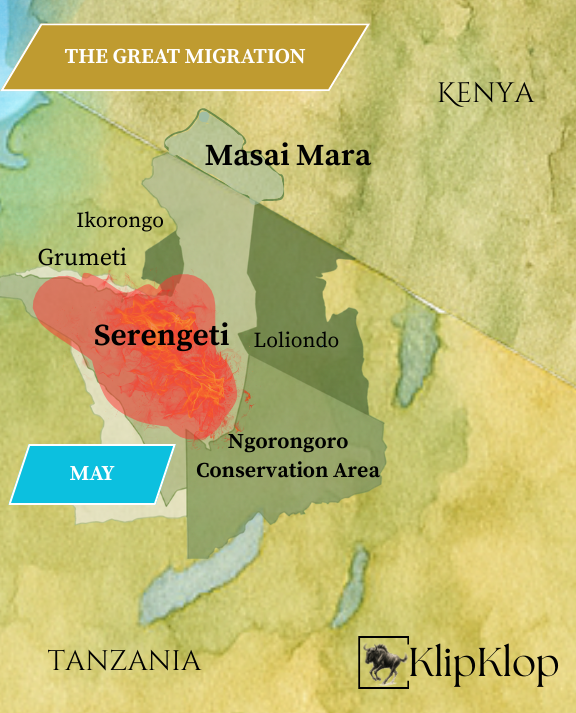
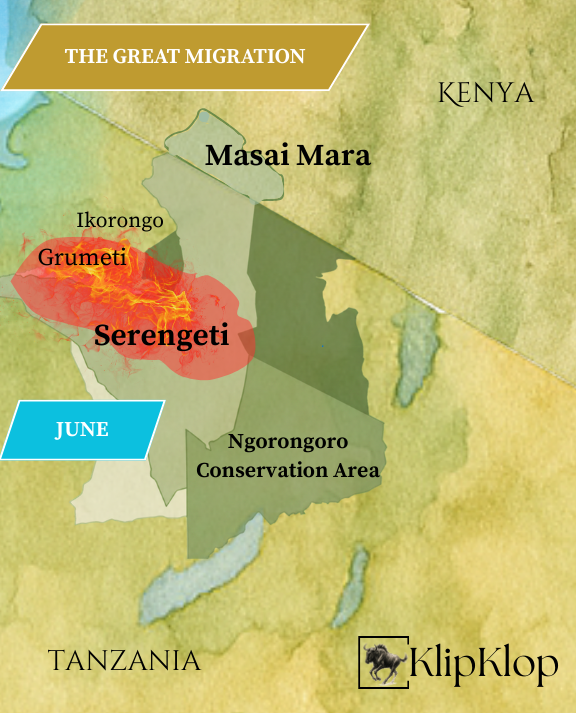
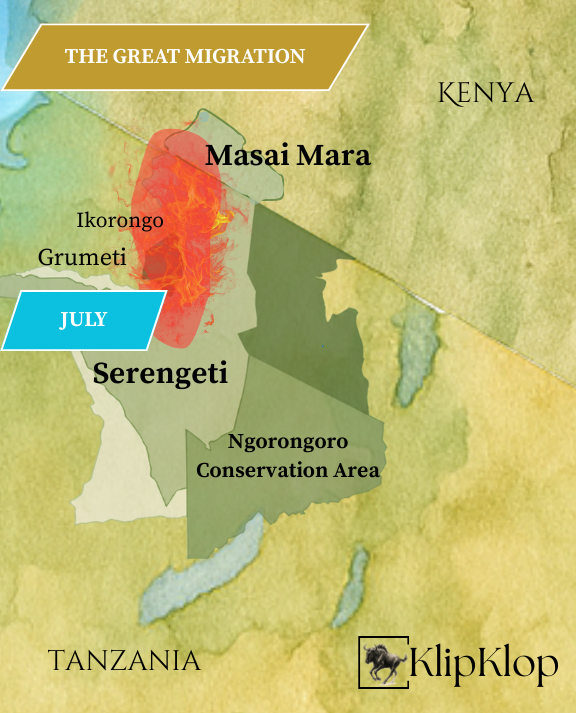
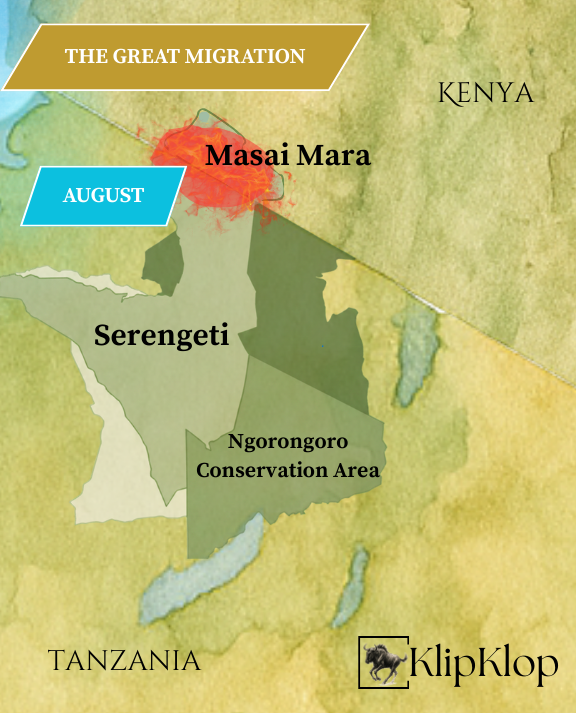
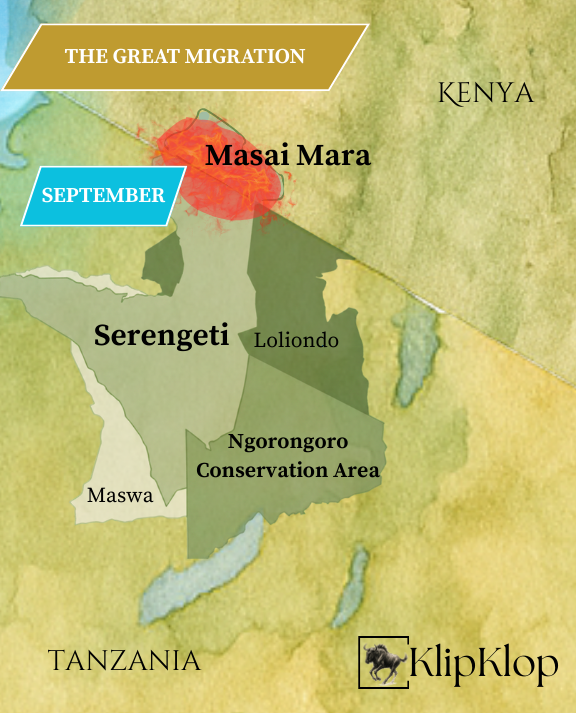
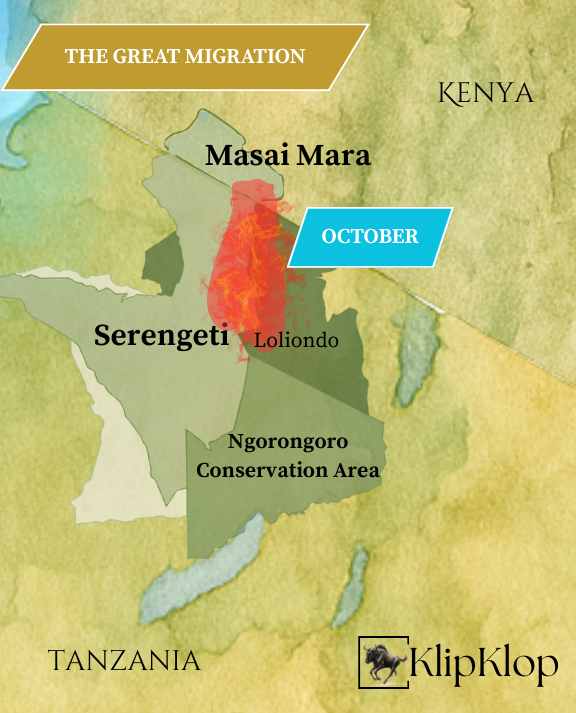
To see where the Great Migration will be in each month you can see the chart below.
November–March: Short rains and Calving Season in Southern Serengeti
The short rains begin in November, greening the plains of the Eastern and Southern Serengeti.
By December, herds gather in the Ndutu area of the Ngorongoro Conservation Area.
February is peak calving season, with over 500,000 wildebeest births within a few weeks—a breathtaking sight.
With vulnerable calves everywhere, predators abound, making this one of the most dramatic times to visit.
April–June: Long Rains & the Western Corridor (Serengeti)
By late March and April, as the long rains arrive, the herds begin moving north and west toward the Moru Kopjes and the Western Corridor.
In May and June, smaller splinter herds move into the Grumeti and Ikorongo regions, where they face their first serious challenge: crossing the crocodile-infested Grumeti River.
While these crossings are less dramatic than the Mara River, they remain intense and action-packed.
July–September: Mara River Crossings (Serengeti & Masai Mara)
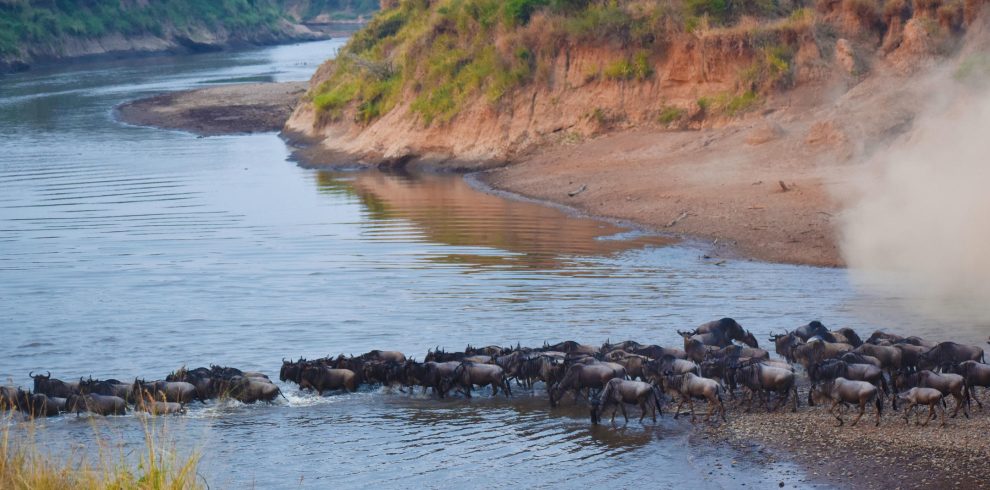
By early July, most herds reach the Northern Serengeti and the Mara River, straddling the border of Tanzania and Kenya.
This is the most famous stage of the migration: wildebeest hurling themselves into the river en masse, sometimes hesitating, sometimes charging in, only to be met by waiting crocodiles.
By August and September, herds are spread across Northern Serengeti and Kenya’s Masai Mara, offering some of the best game viewing on the planet.
October: The Return South (Serengeti)
-
By October, the herds begin their journey back south, moving through the Loliondo and Lobo areas
November-December: The Cycle Continues
The rains begin again in the south, and by November–December, the cycle is complete, with the herds returning to the short-grass plains of the Southern Serengeti for another calving season.
Best Camps for the Great Migration 2025/2026
As you can see from the map above, there is no point in being in Southern Serengeti for the migration in July, since all the herds will be in Northern Serengeti.
To know which camp we recommend, do check out our post on the Best Camps for the Great Migration here.
Having said that, here are the best locations to be in for the migration at various times of the year. Keep in mind that camp luxury levels vary, so its best to get in touch with one of our safari specialists to see what suits your budget and interests best.
To Summarise the Great Migration
The Great Migration is a year-round phenomenon, but the experience varies by season. February–March offers calving and predator action, June–July highlights the Western Corridor, and July–September features the iconic Mara River crossings. By October–November, the herds are once again on the move southward, proving that in nature, the only constant is change.
Planning your Kenya safari in 2025/2026
How to Get to Kenya (Flights, Airlines, Airports)
Planning a Kenya safari? Fly into Nairobi’s Jomo Kenyatta International Airport (NBO) with direct flights from Europe, North America, the Middle East, and Asia. Connect easily via Wilson Airport to the Masai Mara, Amboseli, and other parks, or head to Mombasa and Diani for a beach holiday. Read on here »
When to Visit Kenya (Month-by-Month Weather & Migration)
Wondering when to visit Kenya? From the Great Wildebeest Migration in July–September to baby season in January–March, each month offers something unique. Discover the best time for safari, photography, and beach holidays with our month-by-month Kenya weather and migration guide.
Kenya Safari Costs – How to Budget?
Planning a Kenya safari? Most packages are all-inclusive, covering accommodation, meals, park fees, game drives, and transfers. Expect to budget around $5,000 per person for mid-range safaris, $8,000 for classic camps, and $10,000+ for luxury experiences, with park fees varying by season. Read on here »
Fly-in Safari vs Road Safari — What's the Difference?
Choosing between a fly-in safari and a road safari in Kenya comes down to convenience versus experience. Fly-in safaris save time, offer scenic aerial views, and use open-sided vehicles, while road safaris let you explore the countryside, stop at landmarks, and travel with the same guide throughout your journey. Read more about how fly-in safaris differ from road safaris »
Types of Safari Vehicles in Kenya
On a Kenya safari, the vehicle you choose shapes your experience. Options include budget minibuses with pop-up roofs, closed 4×4 Land Cruisers for comfort and reliability, and open-sided 4x4s that offer the best wildlife viewing inside parks.
How to Book an African Safari (Step by Step)
Planning a safari is unlike planning a typical holiday—it requires choosing the right parks, the best time of year, and camps in prime wildlife locations. With expert guidance from specialist African safari travel agencies like KlipKlop and Chalo Africa, you’ll enjoy seamless logistics, insider knowledge, and the best rates for an unforgettable African adventure.
How to Choose the Best Kenya Safari Camps & Lodges
Choosing the best safari lodge or camp in Kenya can be overwhelming with so many options—from luxury tented camps in the Masai Mara to eco-lodges in community conservancies, private bush villas for families, and beachfront hotels in Diani. The right accommodation depends on your group, travel style, and interests, whether you’re a honeymooner seeking romance, a family needing a child-friendly lodge, or a photographer looking for prime wildlife access. Read more on how to choose the best camp or lodge »
Practical Kenya travel information – Updated 2025/2026
Kenya Visa (ETA) Guide
Wondering how easy or complicated it is to enter Kenya? Do you require a visa? What is an ETA? Read our Kenya visa (ETA) guide to get all your answers.
Vaccination & Health Guide (Yellow Fever, Malaria)
While Kenya offers world-class healthcare in Nairobi, preparing for your health and safety before departure is crucial for a worry-free adventure. Here’s your comprehensive guide to staying healthy during your Kenyan journey.
Is it Safe to Travel to Kenya?
Wondering if Kenya is a safe destination for your next holiday?
The short answer: Yes, Kenya is safe for tourists who take standard travel precautions.
Money, Tipping, SIM Cards, Power Plugs
Before you head off on safari, it’s useful to know the basics about money, tipping, SIM cards, and power plugs in Kenya. From exchanging currency and gratuity norms to staying connected in the bush, here’s everything you need to prepare for a smooth journey.
Packing List for Kenya Safari (Downloadable Checklist)
Clueless about what to pack on your Kenya safari. Checkout our Kenya packing list »
Choosing the best safari for you
The Great Migration 2025/2026
Best Camps for the Great Migration 2025/2026
Few wildlife spectacles rival the Great Migration in Tanzania’s Serengeti and Kenya’s Masai Mara — over a million wildebeest, hundreds of thousands of zebras and gazelles tracing ancient paths across the plains. Choosing the right camp, in the right location, at the right time is key to witnessing this phenomenon at its peak.
Kenya Safari vs Tanzania Safari – Which is Better?
Planning an African safari and torn between a Kenya safari and a Tanzania safari? The choice often comes down to the Masai Mara vs. Serengeti. In Kenya’s Masai Mara, the highlight is the Mara River crossings during the Great Migration in August and September, paired with year-round big cat sightings and easy access from Nairobi. Tanzania’s Serengeti, on the other hand, offers a vast wilderness experience, from the famous calving season in the southern plains (January–March) to predator-prey drama in the north (July–October). Both destinations are exceptional, but the right safari depends on your timing, budget, and the kind of wildlife experience you seek. Read our full post here »
Family Safaris in Kenya
Discover how to plan the perfect family safari in Africa — from the ideal age to take your kids on safari to choosing the most child-friendly lodges and activities that keep little explorers engaged. Learn why most experts recommend waiting until age five and how to craft a journey that sparks curiosity, connection, and lifelong memories for the whole family.
Honeymoon Safaris in Kenya
From hot air balloons over the Serengeti to private dinners at Victoria Falls and barefoot walks on Zanzibar’s beaches, Africa is the ultimate honeymoon destination — where wild romance meets luxury and every sunset feels like your own.
Popular Kenya Safari Parks & Conservancies
- Masai Mara National Reserve
- Masai Mara Triangle
- Masai Mara Conservancies
- Amboseli National Park
- Ol Pejeta Conservancy
- Lake Elementeita
Explore our Kenya Safaris
Set off on an unforgettable 9-day safari through Kenya’s most iconic landscapes, blending thrilling wildlife encounters with luxurious stays. Your journey begins in Ol Pejeta Conservancy, a pioneering Big 5 reserve that shelters the last two northern white rhinos. From there, travel to the serene Lake Elementeita, where golden acacias frame flamingo-lined shores and abundant birdlife. Continue on to the world-famous Masai Mara Triangle, a spectacular wilderness where lions, leopards, elephants, and great plains game roam across the rolling savannah.
Embark on a once-in-a-lifetime journey through Kenya’s most iconic landscapes. From the elephant-dotted plains of Amboseli beneath the snow-capped peak of Mount Kilimanjaro, to the flamingo-fringed shores of Lake Elmenteita, and finally the world-famous Masai Mara Triangle, this 9-day safari is designed for those who crave both adventure and comfort.