
Kenya Safari Vehicles: Difference between Minibus, Pop-Up, and Open-Sided 4x4 Vehicles
When planning a safari in Kenya, the vehicle you travel in can make a big difference to your comfort and overall experience. Broadly speaking, there are three types of safari vehicles commonly used. Here is a list of the primary Kenya safari vehicles:
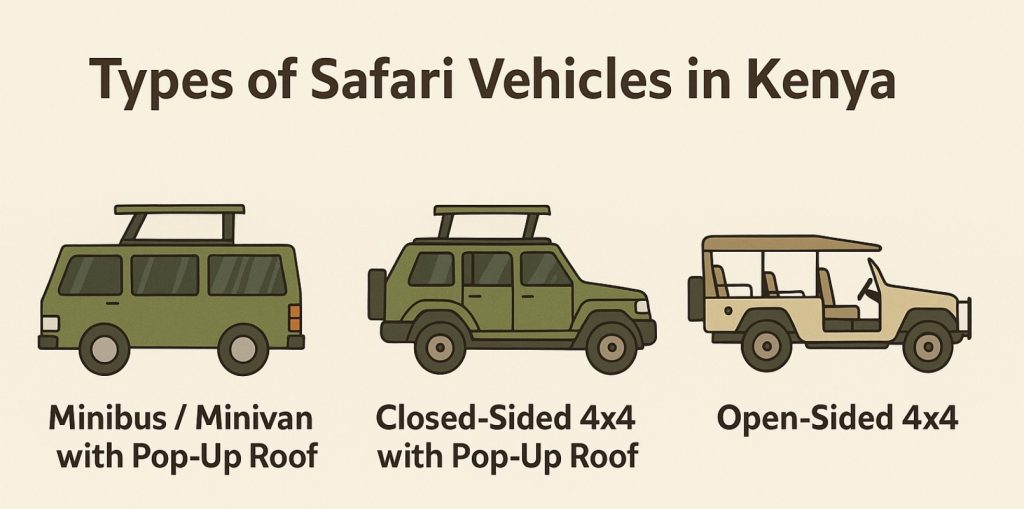
1. Minibus / Minivan with Pop-Up Roof
This is the most cost-effective safari vehicle and is often used by day-trippers to the Masai Mara. It features a pop-up roof for basic game viewing. However, minibuses are not ideal for long safaris—they can be uncomfortable, get stuck easily in muddy conditions, and offer limited visibility compared to 4×4 options.
2. Closed-Sided 4×4 Safari Vehicle with Pop-Up Roof
This is the standard vehicle for most of our KlipKlop road safaris. Usually a modified Toyota Land Cruiser, it combines comfort with off-road capability. These vehicles are well-suited to Kenya’s black cotton soil and rugged tracks, making them essential for game drives. Each seat typically has a window view, with ample legroom, charging points, a small refrigerator for drinks, and a first-aid kit. The pop-up roof allows for excellent photography and safe wildlife viewing.
3. Open-Sided 4×4 Safari Vehicle
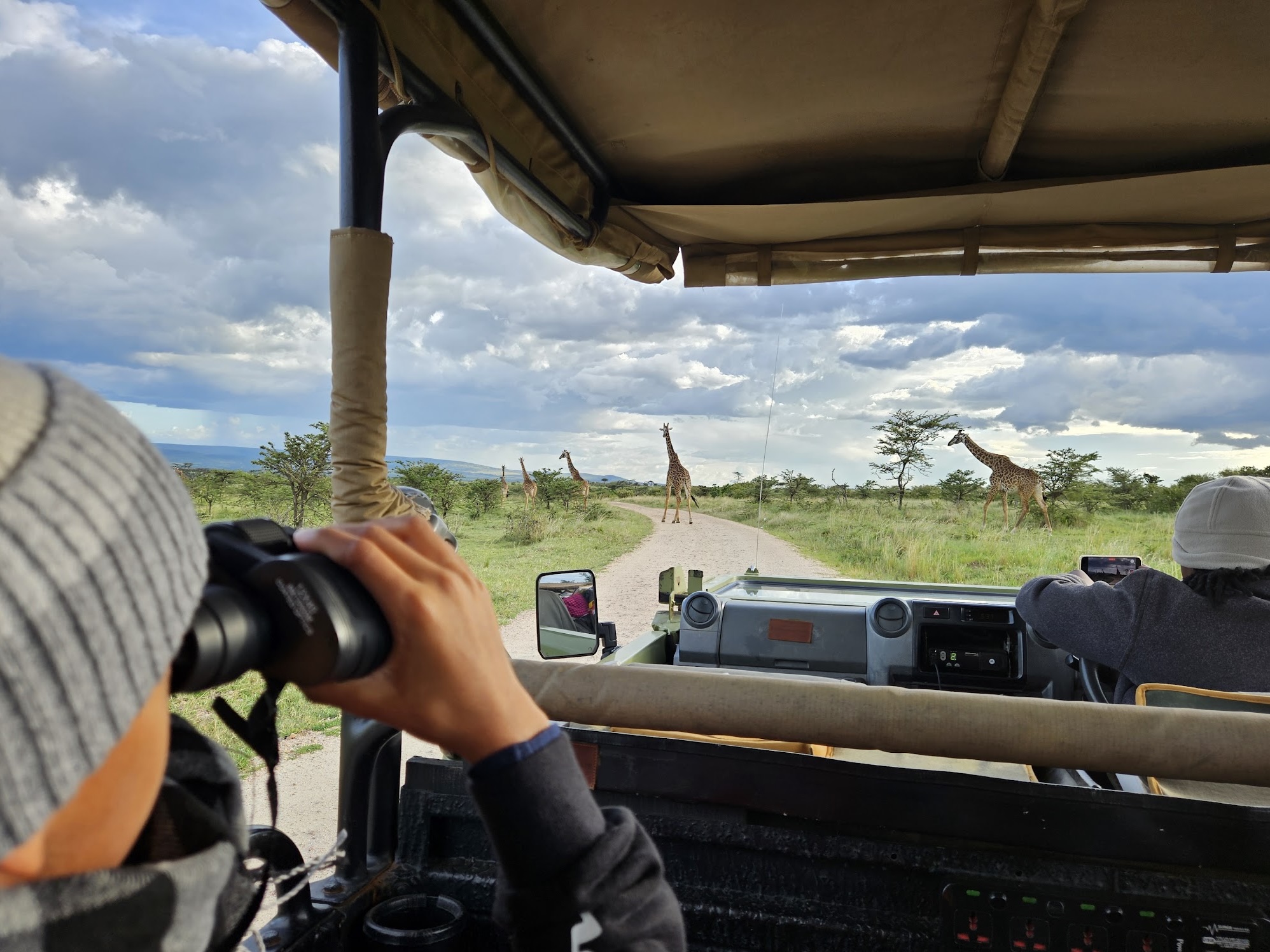
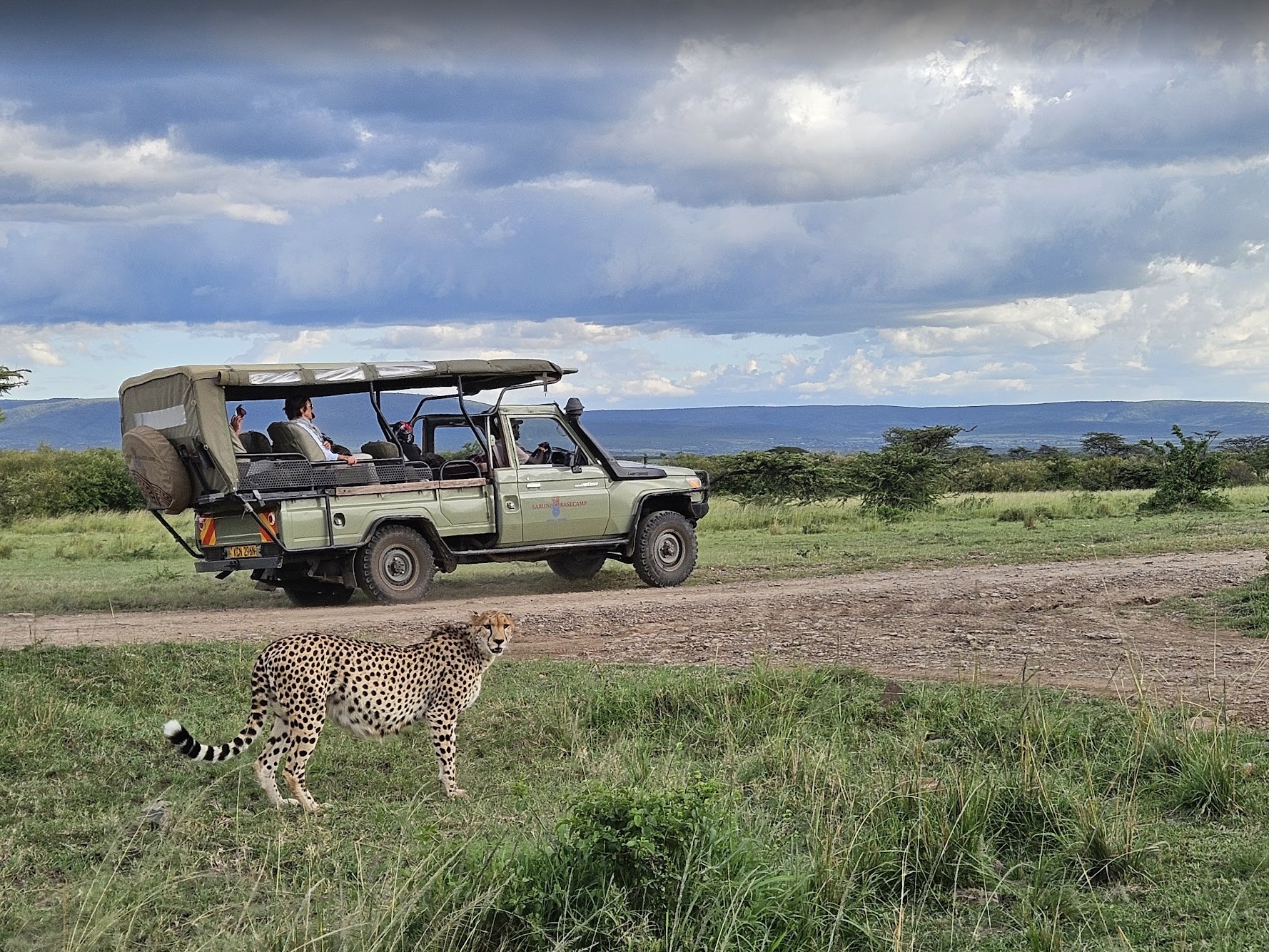
Open-sided vehicles are commonly provided by safari camps and lodges. They are also usually modified Land Cruisers, but with the sides removed and seats elevated for unobstructed views. These are especially great for children and photographers since visibility is clear from all angles. Because open-sided vehicles are not permitted on national highways, they are only used inside national parks and conservancies. Many come equipped with charging points for cameras and phones.
What Safari Vehicles Do We Use on KlipKlop Safaris?
At KlipKlop, we do not use minibuses. All our safaris are conducted in specially modified 4×4 Land Cruisers—either closed-sided with pop-up roofs or open-sided vehicles, depending on your itinerary and preference. This ensures maximum comfort, safety, and the best game-viewing experience.
Can I Do a Self-Drive Safari in Kenya?
While it is technically possible to rent a 4×4 and do a self-drive safari in Kenya, we strongly do not recommend it. Road conditions can be unpredictable, requiring local driving experience. Without a professional guide, you miss out on expert wildlife spotting and fascinating insights—for example, why hyenas live in matriarchal clans or why dung beetles roll balls of dung. There are also safety risks: elephants, in particular, can be unpredictable and dangerous. A guided safari offers not only convenience but also safety and a far richer experience.
We hope our guide to various Kenya safari vehicles was helpful.
Planning your Kenya safari in 2026/2027
How to Get to Kenya (Flights, Airlines, Airports)
Planning a Kenya safari? Fly into Nairobi’s Jomo Kenyatta International Airport (NBO) with direct flights from Europe, North America, the Middle East, and Asia. Connect easily via Wilson Airport to the Masai Mara, Amboseli, and other parks, or head to Mombasa and Diani for a beach holiday. Read on here »
When to Visit Kenya (Month-by-Month Weather & Migration)
Wondering when to visit Kenya? From the Great Wildebeest Migration in July–September to baby season in January–March, each month offers something unique. Discover the best time for safari, photography, and beach holidays with our month-by-month Kenya weather and migration guide.
Kenya Safari Costs – How to Budget?
Planning a Kenya safari? Most packages are all-inclusive, covering accommodation, meals, park fees, game drives, and transfers. Expect to budget around $5,000 per person for mid-range safaris, $8,000 for classic camps, and $10,000+ for luxury experiences, with park fees varying by season. Read on here »
Fly-in Safari vs Road Safari — What's the Difference?
Choosing between a fly-in safari and a road safari in Kenya comes down to convenience versus experience. Fly-in safaris save time, offer scenic aerial views, and use open-sided vehicles, while road safaris let you explore the countryside, stop at landmarks, and travel with the same guide throughout your journey. Read more about how fly-in safaris differ from road safaris »
Types of Safari Vehicles in Kenya
On a Kenya safari, the vehicle you choose shapes your experience. Options include budget minibuses with pop-up roofs, closed 4×4 Land Cruisers for comfort and reliability, and open-sided 4x4s that offer the best wildlife viewing inside parks.
How to Book an African Safari (Step by Step)
Planning a safari is unlike planning a typical holiday—it requires choosing the right parks, the best time of year, and camps in prime wildlife locations. With expert guidance from specialist African safari travel agencies like KlipKlop and Chalo Africa, you’ll enjoy seamless logistics, insider knowledge, and the best rates for an unforgettable African adventure.
How to Choose the Best Kenya Safari Camps & Lodges
Choosing the best safari lodge or camp in Kenya can be overwhelming with so many options—from luxury tented camps in the Masai Mara to eco-lodges in community conservancies, private bush villas for families, and beachfront hotels in Diani. The right accommodation depends on your group, travel style, and interests, whether you’re a honeymooner seeking romance, a family needing a child-friendly lodge, or a photographer looking for prime wildlife access. Read more on how to choose the best camp or lodge »
Practical Kenya travel information – Updated 2026/2027
Kenya Visa (ETA) Guide
Wondering how easy or complicated it is to enter Kenya? Do you require a visa? What is an ETA? Read our Kenya visa (ETA) guide to get all your answers.
Vaccination & Health Guide (Yellow Fever, Malaria)
While Kenya offers world-class healthcare in Nairobi, preparing for your health and safety before departure is crucial for a worry-free adventure. Here’s your comprehensive guide to staying healthy during your Kenyan journey.
Is it Safe to Travel to Kenya?
Wondering if Kenya is a safe destination for your next holiday?
The short answer: Yes, Kenya is safe for tourists who take standard travel precautions.
Money, Tipping, SIM Cards, Power Plugs
Before you head off on safari, it’s useful to know the basics about money, tipping, SIM cards, and power plugs in Kenya. From exchanging currency and gratuity norms to staying connected in the bush, here’s everything you need to prepare for a smooth journey.
Packing List for Kenya Safari (Downloadable Checklist)
Clueless about what to pack on your Kenya safari. Checkout our Kenya packing list »
Choosing the best safari for you
The Great Migration 2026/2027
Best Camps for the Great Migration 2026/2027
Few wildlife spectacles rival the Great Migration in Tanzania’s Serengeti and Kenya’s Masai Mara — over a million wildebeest, hundreds of thousands of zebras and gazelles tracing ancient paths across the plains. Choosing the right camp, in the right location, at the right time is key to witnessing this phenomenon at its peak.
Kenya Safari vs Tanzania Safari – Which is Better?
Planning an African safari and torn between a Kenya safari and a Tanzania safari? The choice often comes down to the Masai Mara vs. Serengeti. In Kenya’s Masai Mara, the highlight is the Mara River crossings during the Great Migration in August and September, paired with year-round big cat sightings and easy access from Nairobi. Tanzania’s Serengeti, on the other hand, offers a vast wilderness experience, from the famous calving season in the southern plains (January–March) to predator-prey drama in the north (July–October). Both destinations are exceptional, but the right safari depends on your timing, budget, and the kind of wildlife experience you seek. Read our full post here »
Family Safaris in Kenya
Discover how to plan the perfect family safari in Africa — from the ideal age to take your kids on safari to choosing the most child-friendly lodges and activities that keep little explorers engaged. Learn why most experts recommend waiting until age five and how to craft a journey that sparks curiosity, connection, and lifelong memories for the whole family.
Honeymoon Safaris in Kenya
From hot air balloons over the Serengeti to private dinners at Victoria Falls and barefoot walks on Zanzibar’s beaches, Africa is the ultimate honeymoon destination — where wild romance meets luxury and every sunset feels like your own.
Popular Kenya Safari Parks & Conservancies
- Masai Mara National Reserve
- Masai Mara Triangle
- Masai Mara Conservancies
- Amboseli National Park
- Ol Pejeta Conservancy
- Lake Elementeita
Explore our Kenya Safaris
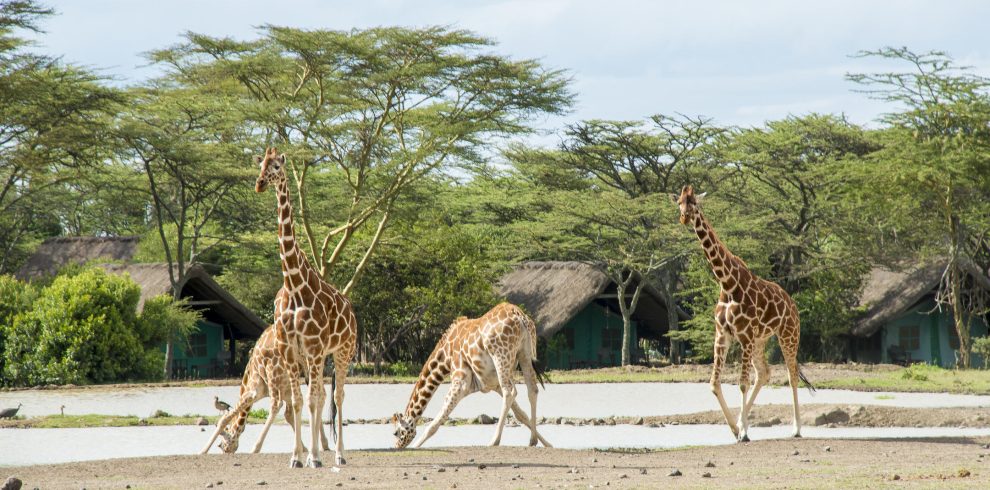
Set off on an unforgettable 9-day safari through Kenya’s most iconic landscapes, blending thrilling wildlife encounters with luxurious stays. Your journey begins in Ol Pejeta Conservancy, a pioneering Big 5 reserve that shelters the last two northern white rhinos. From there, travel to the serene Lake Elementeita, where golden acacias frame flamingo-lined shores and abundant birdlife. Continue on to the world-famous Masai Mara Triangle, a spectacular wilderness where lions, leopards, elephants, and great plains game roam across the rolling savannah.
Embark on a once-in-a-lifetime journey through Kenya’s most iconic landscapes. From the elephant-dotted plains of Amboseli beneath the snow-capped peak of Mount Kilimanjaro, to the flamingo-fringed shores of Lake Elmenteita, and finally the world-famous Masai Mara Triangle, this 9-day safari is designed for those who crave both adventure and comfort.